
Is a Summer Social Skills Group Right for My Child? Parent FAQs
Some children want friends more than anything.
They watch other kids play and want to join in, but they aren’t sure how. They may have something to say, but lose their words when it is their turn. They might become frustrated when another child doesn’t understand them, feel overwhelmed in busy groups, or leave a playdate feeling like they didn’t quite belong.
For parents, grandparents, and caregivers, these moments can be hard to watch.
You may wonder whether your child just needs more time, more opportunities to practice, or more support than a typical camp or playdate can offer.
A summer social skills group can give children a place to practice connection in a way that feels safe, structured, and fun.
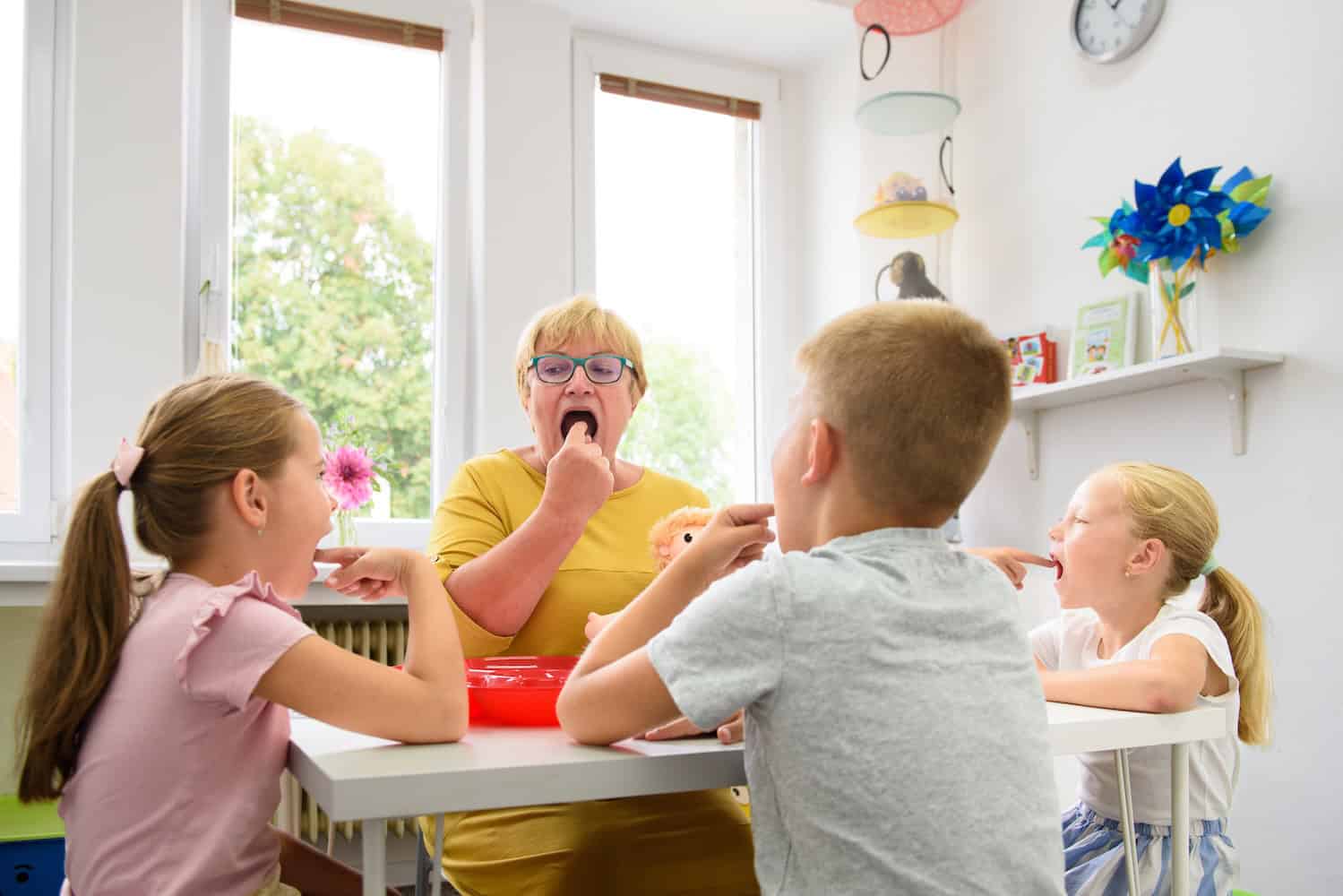
At Swanson Speech Therapy, our Summer Social Programs are small groups led by speech language pathologists. They’re designed to help children build communication skills, emotional awareness, social confidence, and real peer connection through guided play and shared activities.
What Is a Summer Social Skills Group?
A summer social skills group is a small, supportive program where children practice communication and peer interaction with other children their age.
It isn’t another classroom. It isn’t a camp where children are expected to figure everything out on their own. It’s a guided setting where a speech language pathologist helps children practice skills in real moments of play, conversation, movement, and group activities.
Children may work on how to join a game, ask a friend a question, wait for a turn, share an idea, express frustration, recover after disappointment, or stay engaged when something feels unfamiliar.
These are skills that can affect friendships, school participation, family gatherings, playdates, camps, and everyday confidence.
What Can Children Practice in a Social Skills Group?
Every child comes in with different strengths, preferences, and support needs. A social communication group can give children opportunities to practice skills such as:
- Joining play with other children
- Starting and continuing conversations
- Taking turns and sharing
- Expressing wants, needs, and feelings
- Listening and responding to peers
- Understanding emotions in themselves and others
- Building flexibility when plans change
- Solving small problems with support
- Feeling more confident in group settings
Social communication isn’t about teaching children to be someone else. It’s about giving them more tools to connect, communicate, and feel comfortable being themselves.
How Is a Social Skills Group Different From Summer Camp?
Summer camp can be wonderful for many children. It gives kids opportunities to be active, try new things, and spend time around peers.
But a camp usually isn’t designed to provide individualized communication support.
A social skills group is intentionally small and guided by a speech language pathologist. That means children get support in the moment when they are practicing skills with peers.
When a child isn’t sure how to enter a game, share an idea, handle disappointment, or ask for help, there is someone there who understands how to guide the interaction without taking over.
The goal isn’t to make every moment perfect. The goal is to help children build skills they can bring into the rest of their lives.
How Is a Social Skills Group Different From a Playdate?
Playdates can be a valuable way for children to build friendships. They can also be hard.
A child may enjoy being around another child but still struggle with sharing, conversation, flexible play, or recovering when something doesn’t go their way. Parents may find themselves stepping in often, especially when emotions run high.
A social skills group gives children similar opportunities for connection, but with more structure and professional support.
Children can practice being with peers while a speech language pathologist helps make the social experience more manageable, more successful, and more positive.
How Is a Social Skills Group Different From Individual Speech Therapy?
Individual speech therapy gives children focused one to one support for specific communication goals.
That may include articulation, speech sounds, language development, stuttering, AAC, early communication, expressive language, receptive language, or another individual need.
A social skills group gives children a chance to use communication skills with peers in real time.
Some children may benefit from both. Individual therapy can help build a skill, while a group can provide a place to practice that skill in conversations, play, and shared activities.
A social group may be a great fit when your child is ready to practice communication with peers. Individual speech therapy may be a better fit when your child needs more focused support around a specific goal.
You don’t have to know the answer before reaching out. Swanson Speech Therapy can help you think through the best next step.
How Do I Know if My Child Might Benefit From a Group?
A summer social skills group may be a good fit if your child:
- Has trouble joining in with other kids
- Wants friends but isn’t sure how to connect
- Struggles with sharing, turn taking, or group play
- Finds playdates or camps overwhelming
- Has a hard time starting or continuing conversations
- Needs support expressing thoughts, needs, or emotions
- Has speech or language differences that affect peer connection
- Gets frustrated when others don’t understand them
- Needs more confidence in group settings
- Sees a school based speech language pathologist and would benefit from summer support
- Would thrive in a smaller, more supportive setting than a large camp or busy classroom
Children of all neurotypes are welcome.
Does My Child Need a Diagnosis to Benefit From a Social Skills Group?
A diagnosis isn’t what determines whether a child may benefit from a group.
What matters most is how your child is experiencing communication, connection, play, friendships, emotions, and group settings.
Some children come to a social skills group with an autism diagnosis, ADHD, speech or language differences, AAC needs, or another identified support need. Others don’t have a diagnosis but still need more support feeling comfortable and confident around peers.
The right fit depends on your child, their age, their needs, and the kind of support that will help them feel successful.
Does My Child Need to Already Be in Speech Therapy?
No. You don’t need to already know whether your child needs ongoing speech therapy before asking about a summer social group.
Some children who attend are current speech therapy clients. Others are new to Swanson Speech Therapy. Some families are simply looking for a supportive place where their child can practice communication and peer connection over the summer.
If you aren’t sure whether a group or individual therapy would be the better fit, reach out. A conversation can help clarify the next step.
What if My Child Is Shy, Quiet, or Gets Overwhelmed in Groups?
A child doesn’t have to be outgoing to benefit from a social skills group.
Many children who are shy, quiet, or slow to warm up want connection. They may just need more time, a smaller setting, and support that doesn’t put them on the spot.
Swanson Speech Therapy’s small group format gives children room to participate at their own pace while still having opportunities to connect.
Children aren’t expected to perform. They are supported as they practice.
What Happens During a Typical Summer Social Group Session?
Sessions are built around play, movement, games, conversation, and child led activities.
Children may take part in guided activities that help them practice communication, turn taking, emotional awareness, flexible thinking, and connection with peers.
The speech language pathologist helps children navigate real moments as they happen. That may look like helping a child find a way into a game, encouraging them to share an idea, supporting a conversation, or helping them recover after a frustrating moment.
Your child won’t just talk about social skills. They’ll get to practice them with other children.
Can My Child Use AAC in a Social Skills Group?
Children communicate in many different ways.
If your child uses AAC, reach out before registering so Swanson Speech Therapy can learn more about how your child communicates and help determine whether the group is a good fit.
The goal is to create a supportive environment where children can participate, connect, and communicate in ways that work for them.
What if My Child Needs More Individualized Support?
A social skills group isn’t the right fit for every child at every stage.
Some children may benefit more from one to one speech therapy before joining a group. Others may benefit from individual therapy and a social group at the same time.
Swanson Speech Therapy offers individual summer speech therapy for children who need support with speech sounds, language development, stuttering, AAC, early communication, expressive language, receptive language, and other speech and language goals.
A conversation with the team can help you understand which option may best support your child.
Summer Social Skills Groups at Swanson Speech Therapy
Swanson Speech Therapy offers two in person Summer Social Programs in Ballard, Seattle.
Connect and Play
Connect and Play is designed for children ages 4 to 5.
This group gives younger children a playful, supportive place to practice joining in, communicating with peers, sharing space, and building early social confidence.
Sessions are held Tuesdays and Thursdays from 9:00 a.m. to 10:00 a.m.
Stretch and Connect
Stretch and Connect is designed for children ages 6 to 9.
This group supports school age children who may need more practice with friendships, conversations, emotional awareness, and confidence in group settings.
Sessions are held Tuesdays and Thursdays from 10:30 a.m. to noon.
Both programs are held in person at Swanson Speech Therapy in Ballard and maintain a small four children to one speech language pathologist ratio.
For current program dates, tuition, and availability, visit our Summer Social Programs page.
Give Your Child a Summer of Connection and Confidence
Your child doesn’t need another activity that feels like work.
They need a place where they can play, connect, communicate, and feel good about being themselves.
A summer social skills group can give your child more than something to do. It can give them a place to practice friendships, build confidence, and experience the feeling of being part of the group.
Explore Swanson Speech Therapy’s Summer Social Programs to find the right group for your child.
