
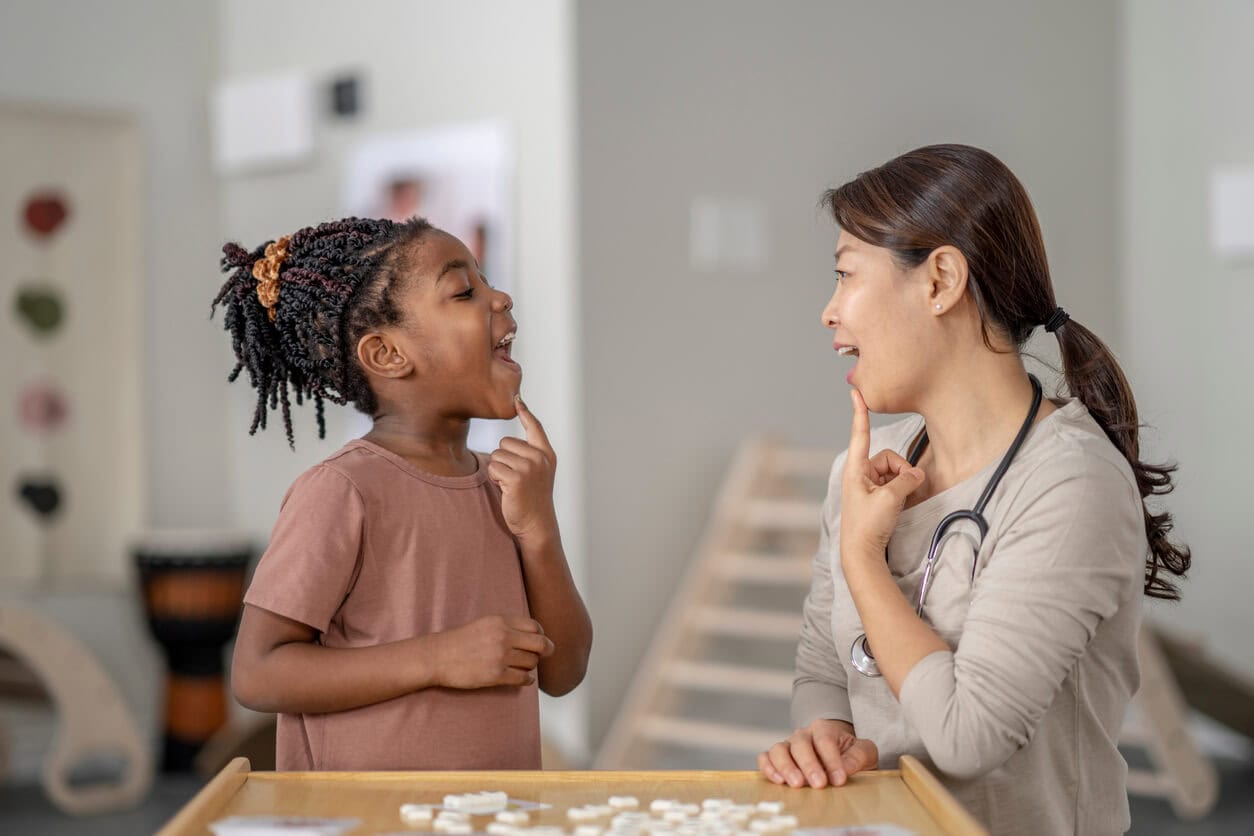
Speech Therapy in Seattle: A Parent’s Guide to Getting Started
For many parents, the worry starts quietly.
A toddler points to the fridge but doesn’t say “milk.” A preschooler grows frustrated when familiar adults can’t understand what they’re saying. A kindergartener repeats the first sound of a word and then stops, looking away. At first, families wait. Children develop at different speeds. Some talk early. Some take their time. Some seem to understand everything but say very little.
Then the questions begin to gather.
Is this still typical? Should we wait a few more months? Would the pediatrician say something if there were a real concern? Is speech therapy only for children with major delays? What happens in an evaluation? And in a city like Seattle, where families are juggling school, work, commutes, waitlists, insurance, and childcare, one more unknown can feel like too much.
Speech therapy isn’t about labeling a child. It’s about understanding how a child communicates now, what they’re trying to do, and what kind of support could help them move forward. For some children, that support may focus on saying sounds more clearly. For others, it may involve building vocabulary, using gestures, strengthening early social communication, reducing frustration, supporting fluency, or helping a child participate more fully at home, school, and in the community.
At Swanson Speech Therapy, families come in with different stories. Some have been referred by a pediatrician. Some have heard concerns from a teacher. Some have simply had the feeling that their child is working too hard to be understood. This guide is designed to help Seattle parents understand when speech therapy may be helpful, what the process looks like, and how to take the first step.
When Should a Parent Consider Speech Therapy?
Parents are often told not to compare their child to anyone else’s. That advice is well-meaning, and it’s partly true. Children do develop on different timelines. One child may use sentences early. Another may spend more time pointing, gesturing, and watching before words take off.
But “every child is different” shouldn’t mean “ignore your concern.”
Speech and language development includes many different skills. A child isn’t only learning how to say words. They’re learning how to understand language, use sounds, take turns, make requests, answer questions, play, imitate, tell stories, follow directions, and connect with other people. When one of those areas feels harder than expected, speech therapy can help identify what’s happening.
Parents may consider speech therapy if their child:
- Uses fewer words than expected for their age
- Has trouble combining words into phrases or sentences
- Seems frustrated because they can’t communicate clearly
- Is difficult for family members or other adults to understand
- Struggles to follow directions or answer questions
- Repeats sounds, syllables, or words in a way that causes concern
- Avoids talking in certain situations
- Relies mostly on gestures instead of words beyond the expected stage
- Has trouble playing or interacting with other children
- Has feeding, oral-motor, or broader developmental concerns connected to communication
- Has lost words or communication skills they once used
A child doesn’t need to meet every sign on this list. Often, the reason to reach out is simpler: something about communication feels harder than it should.
What Speech Therapy Can Help With
Speech therapy is a broad term, and that can make it confusing for parents. Many families picture a child sitting at a table practicing one sound over and over. That can be part of therapy for some children, but pediatric speech therapy often looks much more varied.
A speech language pathologist may support:
Some children know exactly what they want to say, but their sounds are difficult to understand. They may leave off ending sounds, substitute one sound for another, or have patterns that make their speech unclear. Speech therapy can help children learn how to produce sounds more accurately and use them in real conversation.
Language includes both understanding and expression. A child may need help learning new words, combining words, answering questions, using grammar, following directions, or telling a story. Language therapy often uses play, books, conversation, routines, and parent coaching to help children build skills in meaningful ways.
Before children use many words, they communicate through eye contact, gestures, sounds, imitation, pointing, facial expressions, and shared attention. These prelinguistic skills matter. Therapy for younger children may focus on helping them engage, request, imitate, take turns, and participate in simple routines.
Some children repeat sounds or words, stretch sounds out, or get stuck when trying to talk. Stuttering can be typical during certain developmental stages, but it can also become stressful for a child or family. Speech therapy can help parents understand what they’re hearing and support their child in a calm, informed way.
Social Communication
Communication isn’t only about words. Children also learn how to take turns, stay on topic, understand social cues, ask for help, repair misunderstandings, and participate with peers. Therapy may support these skills in ways that are appropriate for the child’s age, personality, and needs.
Some children benefit from additional ways to communicate, such as pictures, signs, communication boards, or speech-generating devices. AAC doesn’t replace speech. For many children, it gives them a way to express themselves more fully while other communication skills continue to grow.
What Happens During a Speech Therapy Evaluation?
The word “evaluation” can sound formal. Parents sometimes imagine a child being tested in a way that feels clinical or intimidating. A good pediatric speech therapy evaluation should feel structured, but also warm, observant, and child-centered.
The goal isn’t to catch a child doing something wrong. The goal is to understand the child.
During a speech therapy evaluation, the therapist may ask about:
- Your child’s developmental history
- Pregnancy, birth, medical, or hearing history
- Early milestones
- Languages spoken at home
- Feeding or oral-motor concerns, if relevant
- What your child understands
- How your child communicates wants and needs
- What concerns you, your pediatrician, or teachers have noticed
- What communication looks like at home, school, daycare, and in the community
The therapist may use formal assessment tools, informal play-based observation, parent interview, language samples, speech sound tasks, and interaction with the child. For a toddler, this may look like playing with toys, reading a simple book, watching how the child requests help, and listening for sounds or words. For an older child, it may include looking at sentence structure, storytelling, articulation, fluency, or social communication.
Parents are an important part of the process. You know what your child sounds like when they’re tired, excited, overwhelmed, hungry, silly, or trying to tell a story from the back seat. That context matters.
After the evaluation, the therapist should explain what they noticed in clear language. You should leave understanding your child’s strengths, areas of need, whether therapy is recommended, and what next steps might look like.
Does My Child Need a Diagnosis to Start Speech Therapy?
Not always.
Some children come to speech therapy with a diagnosis, such as autism, childhood apraxia of speech, developmental delay, hearing loss, or another medical or developmental condition. Others come because they aren’t meeting expected communication milestones or because their speech is difficult to understand.
A diagnosis can sometimes help guide care, insurance coverage, or referrals. But parents don’t need to have everything figured out before asking for help. In many cases, a speech therapy evaluation is part of figuring out what kind of support a child may need.
If the therapist sees signs that another professional should be involved, they may recommend additional referrals. That might include a hearing evaluation, developmental evaluation, occupational therapy, or follow-up with a pediatrician. Speech therapy is often one piece of a larger support system.
Private Speech Therapy vs. Waiting
One of the hardest questions parents face is whether to wait.
Waiting can feel reasonable, especially when a child is young. Families hear stories about children who didn’t talk much until age three and then suddenly spoke in full sentences. Sometimes children do make quick gains. Sometimes a concern resolves with time and everyday support.
But waiting can also prolong frustration for a child who’s already trying to communicate.
Private speech therapy gives families information. It doesn’t force a long-term commitment. An evaluation can clarify whether a child’s skills are within an expected range, whether therapy is recommended, and what parents can do at home. If therapy isn’t needed, parents gain peace of mind. If therapy is needed, the child can begin receiving support sooner.
Early support can also help families shift from worry to action. Parents often leave with practical strategies they can use during meals, bath time, play, reading, walks, car rides, and bedtime routines.
What Speech Therapy Looks Like for Young Children
For young children, speech therapy often looks like play.
That doesn’t mean it’s casual or unplanned. Play is how young children learn. A therapist may use bubbles, blocks, books, pretend food, toy animals, cars, sensory materials, or songs to create opportunities for communication. The child may be practicing sounds, gestures, imitation, requests, turn-taking, vocabulary, or short phrases without feeling like they’re being drilled.
A session might include:
- Modeling simple words during play
- Encouraging the child to request more, help, open, or all done
- Practicing sounds in fun, repeated routines
- Helping a child combine words
- Teaching parents how to pause, wait, model, and expand language
- Using books to support vocabulary and comprehension
- Creating opportunities for the child to initiate communication
For toddlers and preschoolers, parent involvement is especially important. The therapist may coach caregivers during the session so strategies continue throughout the week. A child’s progress isn’t built only in the therapy room. It’s built in the small daily moments when communication matters most.
What Speech Therapy Looks Like for Older Children
Older children may work on different goals depending on their needs. Therapy may focus on articulation, language organization, grammar, storytelling, fluency, social communication, self-advocacy, or confidence speaking in different settings.
A school age child might work on:
- Producing specific speech sounds clearly
- Using longer, more complete sentences
- Retelling events in order
- Understanding and answering “wh” questions
- Using strategies during moments of stuttering
- Repairing communication breakdowns
- Explaining ideas clearly
- Participating more comfortably in conversation
Good therapy should still feel connected to real life. A child who can say a sound correctly in a session also needs to use it when telling a joke, asking for a snack, talking to a teacher, or playing with a friend. The goal is functional communication, not performance in isolation.
How Seattle Families Can Choose a Speech Therapist
Families in Seattle have options, and that can be both helpful and overwhelming. When choosing a pediatric speech therapist, consider more than location alone.
Look for someone who:
- Has experience with your child’s age and area of need
- Explains things clearly
- Includes parents in the process
- Builds rapport with your child
- Uses therapy approaches that fit your child’s communication goals
- Offers practical home strategies
- Communicates openly about progress
- Understands the difference between school-based support and private therapy
- Makes your family feel respected, not rushed
It’s also reasonable to ask about scheduling, insurance, superbills, network gap exceptions, virtual options, cancellation policies, and how goals are set. Families should understand what they’re committing to before therapy begins.
In-Person and Virtual Speech Therapy
Some families prefer in-person therapy because their child responds well to direct play, movement, and hands on interaction. Others prefer virtual speech therapy because it reduces travel time, fits better into family schedules, or allows therapy to happen in the home environment where communication routines naturally occur.
Virtual speech therapy can be especially useful for parent coaching, language strategies, and some school-age goals. In-person therapy may be a better fit for children who need more physical prompting, play-based support, or help engaging with materials in the room. The best option depends on the child, the goals, and the family’s schedule.
For Seattle families managing work, school pickup, traffic, and multiple children, flexibility matters. A therapy plan should be realistic enough to continue.
How Long Does Speech Therapy Take?
There’s no single answer.
Some children need short-term support for a specific speech sound. Others benefit from longer-term therapy for language, fluency, social communication, or complex communication needs. Progress depends on the child’s age, goals, consistency, home practice, underlying needs, and how often therapy occurs.
A therapist should be able to explain what progress they’re watching for. That might include clearer sounds, more words, longer phrases, fewer communication breakdowns, more confidence, stronger comprehension, or greater participation in daily routines.
Therapy shouldn’t feel like an endless process with no explanation. Goals should be reviewed, updated, and connected to what the family sees outside the session.
What Parents Can Do at Home
Parents don’t need to become therapists. But they can make everyday communication easier and more meaningful.
Helpful strategies may include:
- Getting face-to-face during play
- Waiting before jumping in to help
- Modeling simple words and phrases
- Expanding what your child says
- Reading the same books more than once
- Offering choices
- Narrating routines in simple language
- Following your child’s interests
- Celebrating communication attempts, not just perfect words
- Reducing pressure to “say it” on command
Small changes can matter. A parent who pauses before opening a snack gives the child a chance to request. A parent who says “big truck” after a child says “truck” shows how language can grow. A parent who notices a point, sound, or look as communication helps the child understand that their message worked.
When to Reach Out
You don’t need to be certain before contacting a speech therapist. Uncertainty is often the reason families reach out in the first place.
If your child is frustrated, hard to understand, not using words as expected, struggling to follow language, stuttering in a way that concerns you, or having difficulty communicating with others, a speech therapy evaluation can provide clarity.
Some families wait because they worry they’re overreacting. But asking questions isn’t overreacting. It’s parenting.
Speech therapy in Seattle can help families move from wondering to understanding. It can help children feel less frustrated and more connected. It can give parents practical tools. And it can make communication feel less like a source of worry and more like something everyone is learning how to support together.
Frequently Asked Questions About Speech Therapy in Seattle
How do I know if my child needs speech therapy?
You may want to consider speech therapy if your child is difficult to understand, uses fewer words than expected, struggles to combine words, becomes frustrated when communicating, stutters, has trouble following directions, or doesn’t seem to be progressing with communication skills. A speech therapy evaluation can help determine whether support is recommended.
What age should a child start speech therapy?
Children can begin speech therapy at many different ages, including toddlerhood. Therapy for very young children often focuses on early communication, gestures, play, imitation, and parent coaching. If you have concerns, you don’t need to wait until your child reaches school age.
Is it better to wait and see if my child catches up?
Some children do catch up, but waiting isn’t always the best choice. An evaluation can help you understand whether your child’s communication is within an expected range or whether support would be helpful. Seeking an evaluation doesn’t mean your child will automatically need long-term therapy.
What happens during a pediatric speech therapy evaluation?
A speech therapy evaluation may include parent interview, observation, play-based activities, formal or informal assessment, speech sound tasks, language sampling, and discussion of your child’s history and communication needs. Afterward, the therapist should explain findings and recommendations clearly.
Does speech therapy help with stuttering?
Speech therapy can help children who stutter and their families understand fluency, reduce communication pressure, and build supportive strategies. If your child is showing signs of stuttering or seems upset by talking, it’s worth reaching out for guidance.
What happens during a pediatric speech therapy evaluation?
A speech therapy evaluation may include parent interview, observation, play-based activities, formal or informal assessment, speech sound tasks, language sampling, and discussion of your child’s history and communication needs. Afterward, the therapist should explain findings and recommendations clearly.
Can speech therapy help if my child understands everything but does not talk much?
Yes. Some children have stronger receptive language, which is what they understand, than expressive language, which is what they say or communicate. Speech therapy can help children build expressive communication using words, gestures, signs, pictures, or other supports.
Do you offer speech therapy for preschoolers in Seattle?
Swanson Speech Therapy supports children across developmental stages, including preschoolers. Preschool speech therapy may focus on articulation, early language, play skills, social communication, fluency, or parent coaching depending on the child’s needs.
What is the difference between speech and language therapy?
Speech often refers to how sounds are produced and how clearly a child can be understood. Language refers to understanding and using words, sentences, grammar, questions, and stories. Many children need support in one area, while others need support in both.
Can virtual speech therapy work for children?
Virtual speech therapy can be effective for some children and goals, especially when parent coaching is involved. Whether virtual or in-person therapy is the best fit depends on the child’s age, attention, needs, and family schedule.
How do I get started with speech therapy in Seattle?
The first step is to contact Swanson Speech Therapy and share your concerns. From there, the team can help you understand whether an evaluation is appropriate, what information is needed, and what scheduling options may be available.
